Stop Designing by Gut Feeling: Why UX Must Be Measured with Data, Not Intuition
After 15 years in UIUX, I keep running into the same problem — executives make design decisions based on personal taste instead of letting teams find answers from real users. This article explains why that's a problem and how to fix it.
"I think this button should be bigger"
That sentence sounds harmless enough. But if you're a UX Designer, you know it's the beginning of a problem.
Over my 15 years in UIUX — from agencies to large-scale e-commerce platforms to leading insurance companies — I've encountered the same pattern over and over again:
Executives use gut feeling to judge UX work.
It's not because they're not smart. Quite the opposite — most executives are very smart. But business acumen and understanding user experience are two entirely different things.
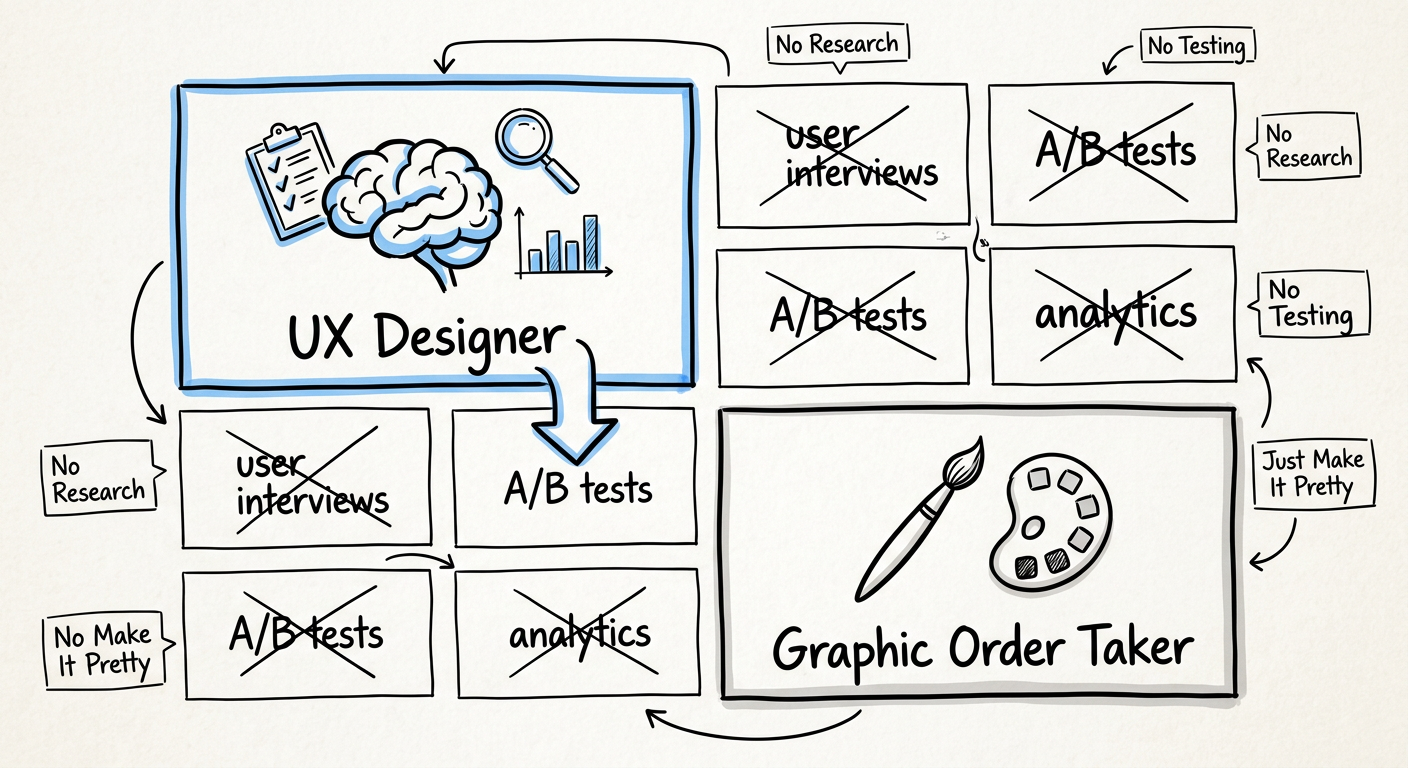
The Problem: When UX Designers Become "Graphic Order-Takers"
Picture this:
A product team spends 3 weeks doing research — interviewing users, analyzing data, running usability tests. They build wireframes from real insights. They design flows that address the pain points they've uncovered.
Then one day, an executive walks over, glances at the screen, and says:
"I don't like this color. Change it to blue." "Why isn't there a banner here? Our competitors have one." "I don't like this layout. Make it look like website X."
Three weeks of research, overridden by three minutes of personal opinion.
When this happens repeatedly, UX Designers start to:
- Stop doing research — because it gets overridden anyway
- Stop sharing insights — because no one listens
- Become order-takers — "Just tell me what you want, and I'll make it"
The UX Designer becomes a graphic production worker following orders, not someone solving user problems.
Why Gut Feeling Is Dangerous
Gut feeling isn't always wrong. But it has structural problems:
1. You Are Not the User
An executive using an iPhone 16 Pro Max with 1 Gbps fiber internet who understands every corner of the business model — is not representative of the user.
Real users might be on a budget Android phone, struggling with spotty 4G, and have never read an FAQ in their life.
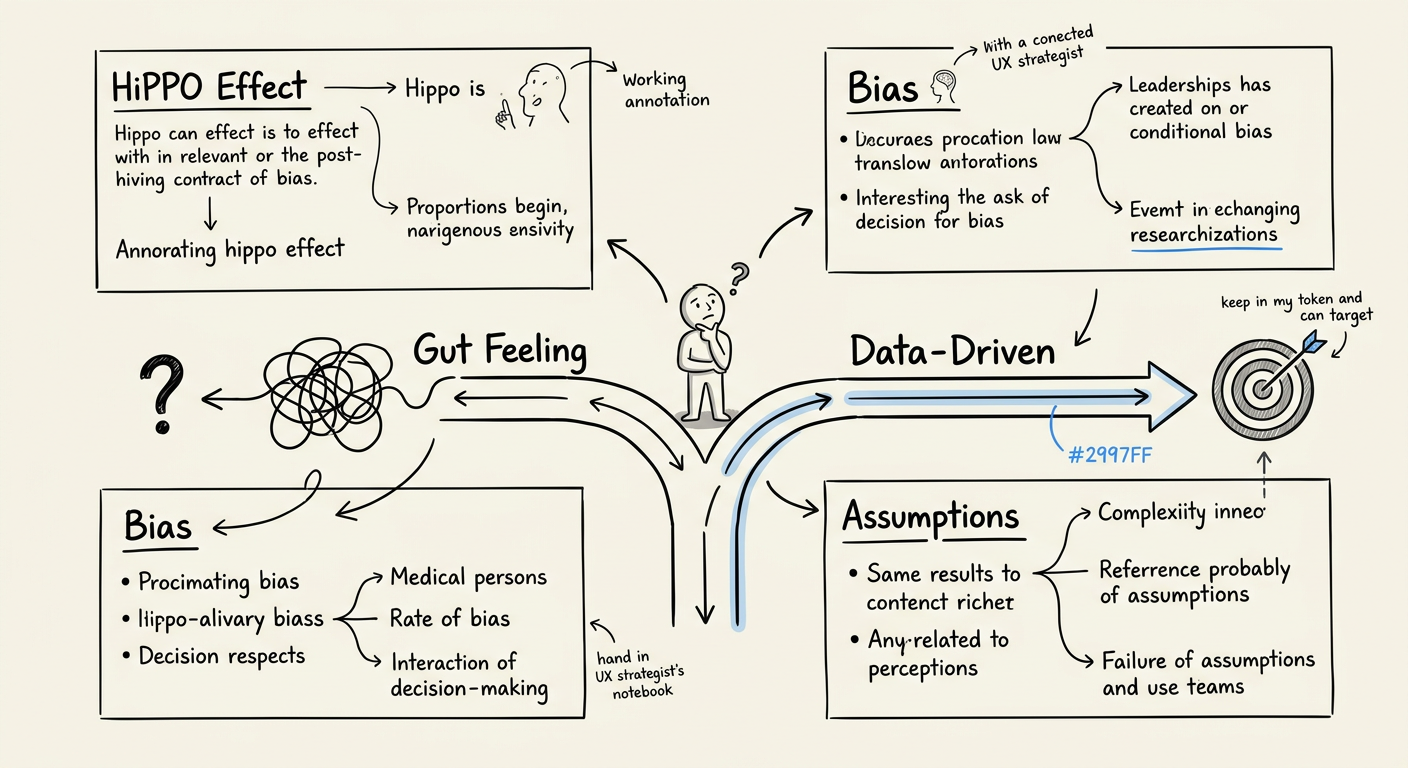
2. The HiPPO Effect
HiPPO = Highest Paid Person's Opinion
In a meeting room, the highest-paid person's opinion usually wins. Not because it's right, but because no one dares to push back.
3. Survivorship Bias
"The current site works just fine" — in reality, you have no idea how many people visited and quietly left without ever complaining.
Unhappy users don't leave feedback — they just leave.
4. Confirmation Bias
Once an executive believes "the red button is better than blue," even if an A/B test proves otherwise, they'll find reasons to explain why the data is wrong.
What Executives Should Do Instead
I'm not saying executives shouldn't be involved in design. On the contrary — executives are crucial. But their role should shift:
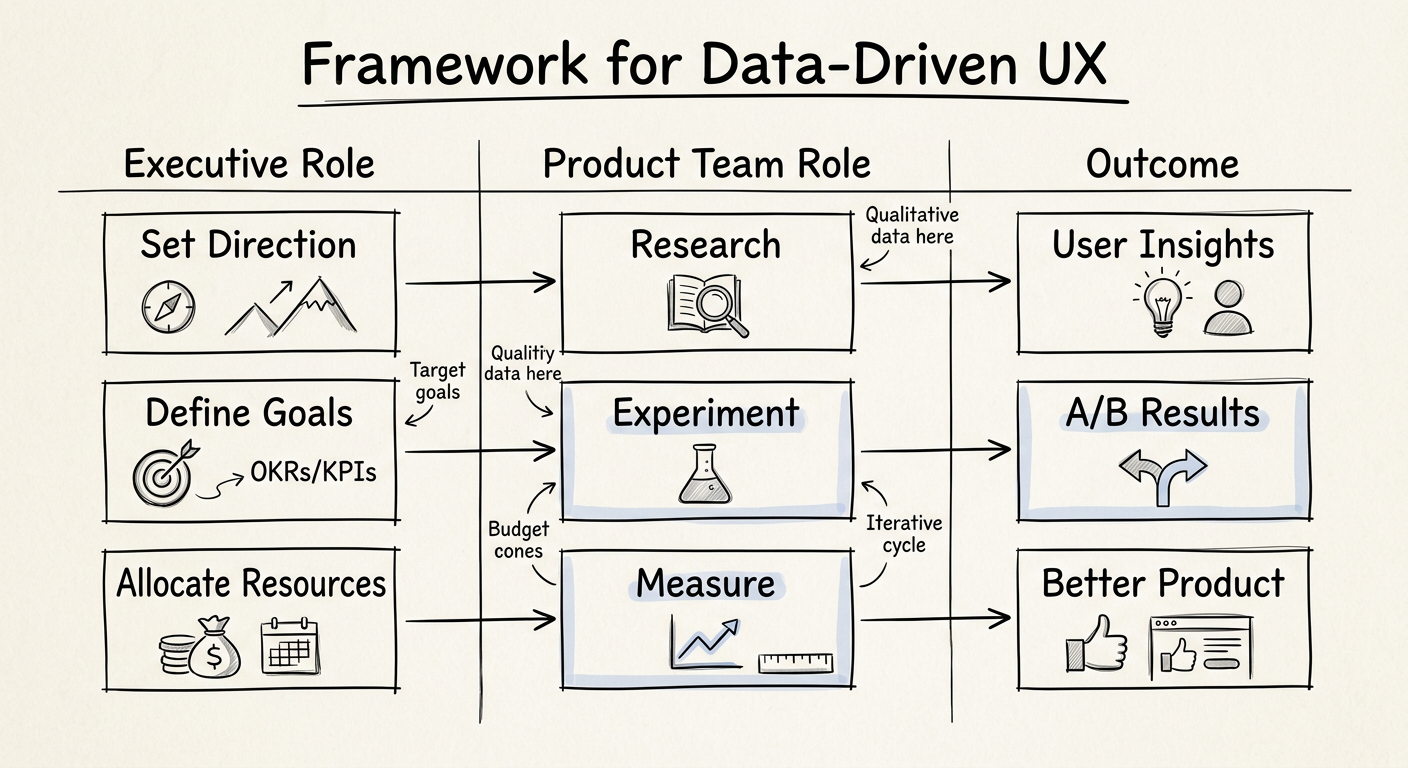
From "Dictating what to do" → "Framing the problem to solve"
Instead of saying "Change the button to red"
Try saying "The conversion rate on this page is lower than expected. Can the team investigate why and run some experiments to fix it?"
Build a Framework That Lets the Team Experiment
Great executives don't design the UI — they create an environment where the team can experiment safely:
- Allocate time for research — not everything has to ship today
- Budget for usability testing — even testing with just 5 users can produce massive insights
- Make room for A/B testing — let data decide, not job titles
- Be willing to say "I don't know" — and let the process find the answer
Measure with Metrics, Not Feelings
| Gut Feeling | Data-Driven | |:---|:---| | "This page looks cluttered" | Heatmap shows where users actually click | | "Customers will probably like this" | A/B test shows which variant converts better | | "Make it like the competitor" | User interview reveals what users actually need | | "This button is too small" | Analytics shows the click-through rate |
Case Study: What Happened When We Used Data Instead of Gut Feeling
Product Comparison Platform
An executive once suggested adding more information to a comparison page — the more the better. The logic sounded reasonable.
But when we ran usability tests, we found:
- Users were overwhelmed by too much information
- Users only used 3 out of 15 criteria to make decisions
- Bounce rate increased when displaying more than 5 columns
We reduced the information and showed only the criteria users actually relied on → bounce rate dropped by 23%.
Online Form System
In another project, an executive wanted the signup form to include every single field on the first page — "so users don't have to come back and fill in more later."
But the data told a different story:
- Users dropped off at 67% on the first page of the form
- The main reason: seeing too many fields made them feel like it was too hard
We switched to progressive disclosure — ask 3 questions first, then expand → completion rate increased by 40%.
In both cases, the executives' logic wasn't wrong. But users don't think like executives.
How to Get Started: For Organizations Still Running on Gut Feeling
If your organization still makes UX decisions based on feelings, you don't have to change overnight. Start small:
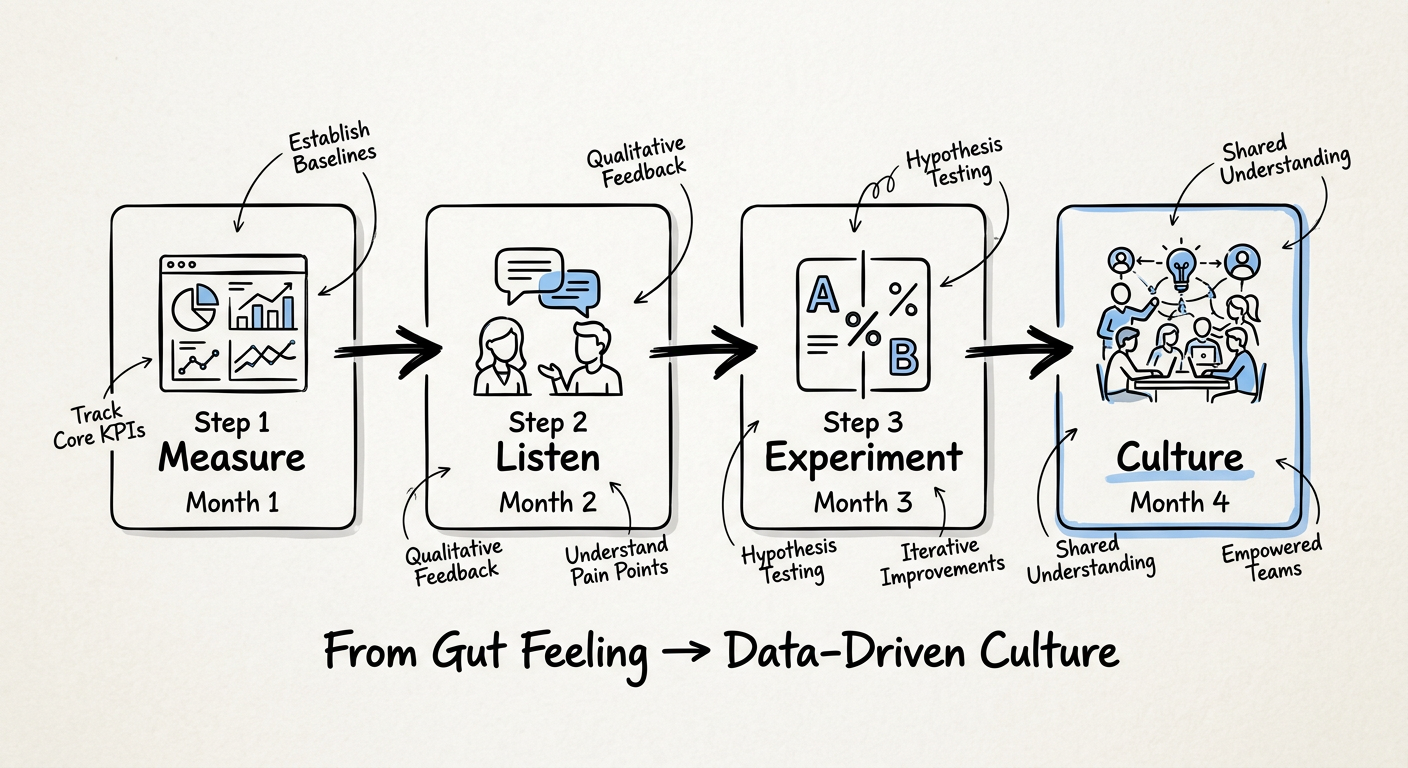
Month 1: Start Measuring
- Set up analytics that track real user behavior (not just pageviews)
- Establish baseline metrics — where are we right now?
Month 2: Start Listening to Users
- Run usability tests with 5 real users
- Record video sessions for executives to watch — nothing is more powerful than seeing a real user struggle with a design you thought was "good enough"
Month 3: Start Experimenting
- Run your first A/B test — pick something small with clearly measurable results
- Present the findings to executives so they can see what the data says
Month 4+: Build the Culture
- Make "let's test it first" the default mindset
- Shift from "executives decide" to "data decides, executives set direction"
Conclusion
Gut feeling isn't the enemy — it can be a great starting point for a hypothesis.
But gut feeling should never be the final answer.
The best executives I've ever worked with aren't the ones with the strongest opinions. They're the ones who say:
"I have an opinion, but let the team test it first. If the data says I'm wrong, I'm happy to change my mind."
That's the kind of leadership that builds truly great products.
Stop designing by feeling. Start designing by understanding.