Managing Stress When UX Work Doesn't Go as Planned
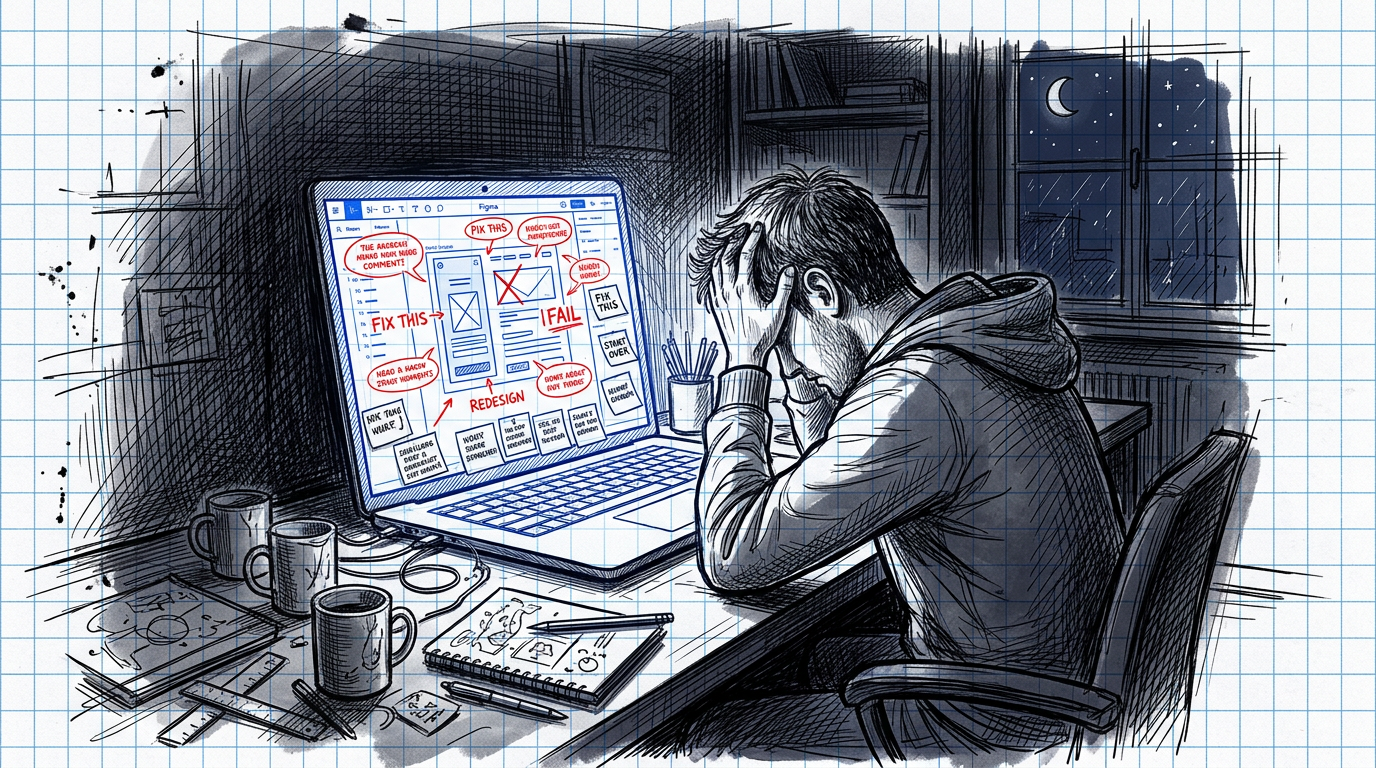
When UX is still seen as just 'making things pretty,' when feedback feels like the sky is falling, and when designs you poured yourself into get dismissed in a meeting — this article is written by someone who once sat crying in front of a Figma file.
The Night I Almost Gave Up
It was a Thursday night, around 10 PM.
I was staring at a Figma file covered in red comment bubbles. Every comment was feedback from that afternoon's review — a design I'd spent 2 weeks on, torn to shreds in 45 minutes.
"Doesn't match the brand." "This flow is too complex." "Why don't we just copy the competitor?" "I don't know what to click next." "Maybe start over from scratch."
My 4th coffee of the day had gone cold. I sat staring at the screen and asked myself, "Why am I still doing this?"
If you've ever felt this way — this article is for you.
Why UX Work Is Stressful in Ways Outsiders Don't Understand
1. Our Work Is More "Personal" Than We Realize
A developer writes code — the code isn't their identity. If there's a bug, you fix the bug.
But designers pour themselves into their work. Every color, every layout, every flow is a decision born from our experience, beliefs, and perspective.
When feedback comes, it doesn't just feel like "the work is being criticized" — it feels like we're being criticized.
2. Feedback Is Usually Subjective, Not Objective
Code is right or wrong — it compiles or it doesn't. Tests pass or they don't.
But design? "I don't like it" is considered valid feedback in a meeting room, even when there's zero logic behind it.
The subjectivity of feedback is the primary source of stress in UX — because you can't prove you're right the way a developer can point to test results.
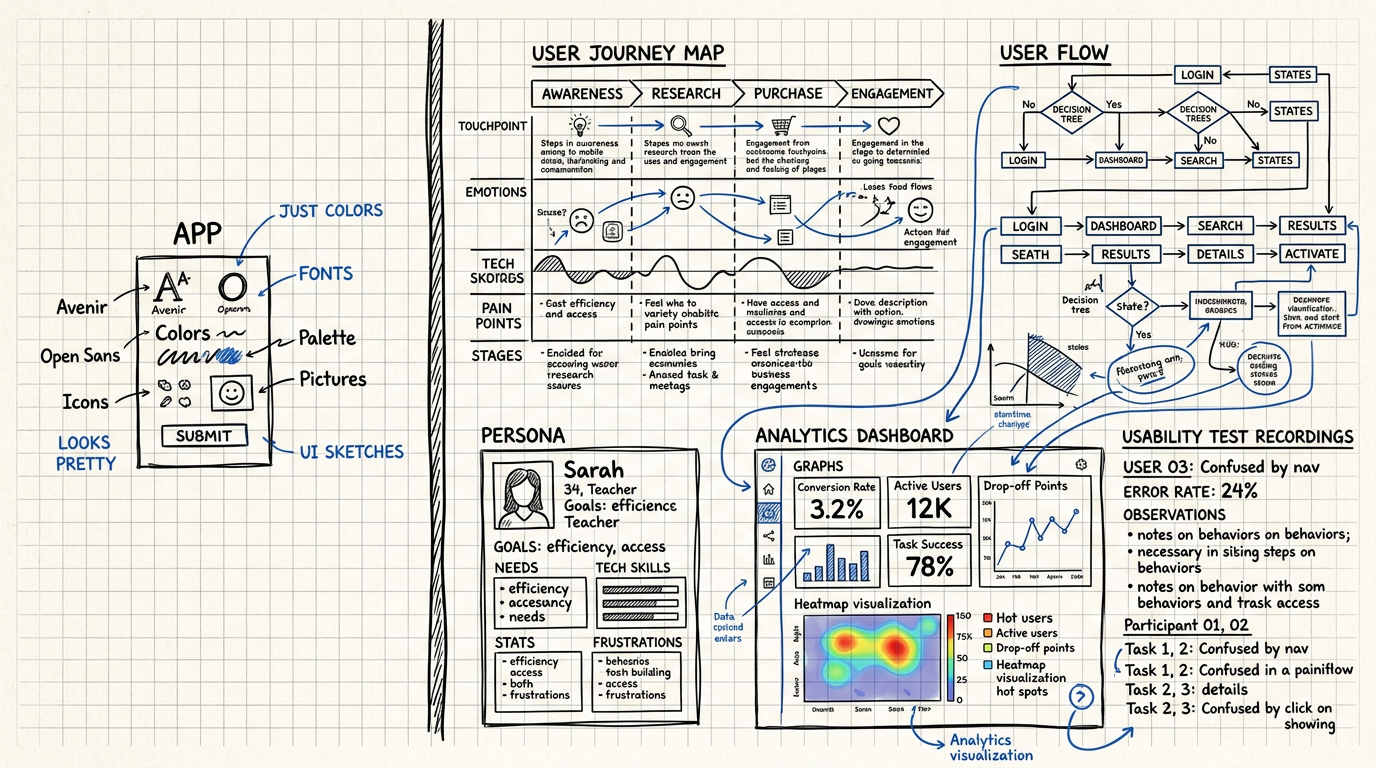
3. UX Is Still Seen as "Making Things Pretty"
This is the wound that cuts deepest.
You spend 3 weeks doing research, interviewing users, analyzing data, building journey maps, designing flows that address real pain points.
Then a VP walks over, glances at the screen, and says, "Looks nice, but I think this button should be red."
Three weeks of research, reduced to "pretty or not pretty" in the eyes of someone who doesn't understand.
When this happens over and over, you start questioning: "Does any of what I do actually matter?"
The Feedback Storm: When Everyone Has Conflicting Opinions
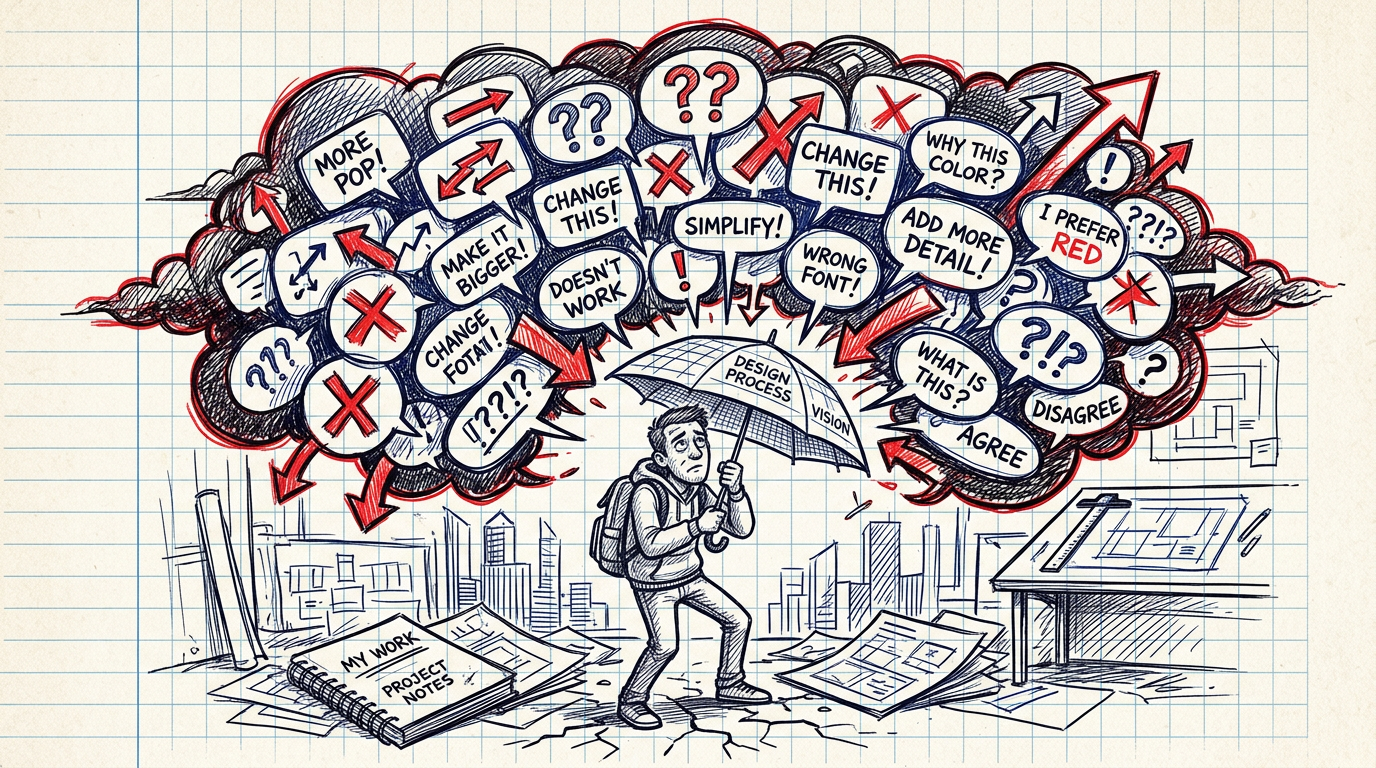
Feedback from 1 person is manageable. But in reality, design reviews typically involve 5–10 people — and everyone disagrees:
- PM: "Simplify it. Cut features."
- VP Marketing: "Add more information. The more the better."
- Dev Lead: "This can't be implemented."
- CEO: "I saw App X do it like this. Make it look like that."
- Sales: "Clients say they want this feature."
Everyone speaks with confidence. Everyone believes they represent the user. But nobody brings data to support their opinion.
And you — the lone designer in the room — have to:
- Listen to everyone
- Separate noise from signal
- Find a compromise that doesn't destroy the UX
- Not make anyone feel ignored
- Go back and revise the design to address all conflicting feedback
Within the original deadline.
If you don't feel stressed yet — congratulations, you might be a robot.
What Happens When Stress Goes Unmanaged
When stress accumulates without being addressed, it doesn't just make you "tired" — it changes how you work:
Stage 1: Playing It Safe
You stop proposing bold ideas because you fear rejection. Everything becomes the "safe choice" that nobody will complain about — but isn't good enough to impress either.
Stage 2: Taking Feedback Personally
Every piece of feedback feels like an attack. "I don't think this layout works" gets interpreted as "you're a bad designer."
Stage 3: Shutting Down
You stop voicing opinions in meetings. Stop proposing alternatives. Become an order taker who only asks, "What do you want? Just tell me."
Stage 4: Burnout
Complete exhaustion. Working on autopilot. Quality drops. You feel nothing about the work anymore — no joy when shipping, no pain when rejected.
I've been at Stage 3. And I know that if you don't catch yourself, Stage 4 comes fast.
How to Manage the Stress: From Someone Who's Been There
1. Separate "You" from "the Work"
This is the most important skill and the hardest to learn.
The design you made isn't you. It's one proposal on a spectrum of possible solutions. If it gets rejected, it doesn't mean you're not good — it just means this particular solution doesn't fit this particular context at this particular time.
Try reframing:
- "My design got rejected" → "Solution A didn't pass. Time to try Solution B."
- "They don't like my work" → "The stakeholder has concerns that need addressing."
- "I'm not good enough" → "I don't have enough data yet to make a convincing case."
2. Build a Feedback Filter
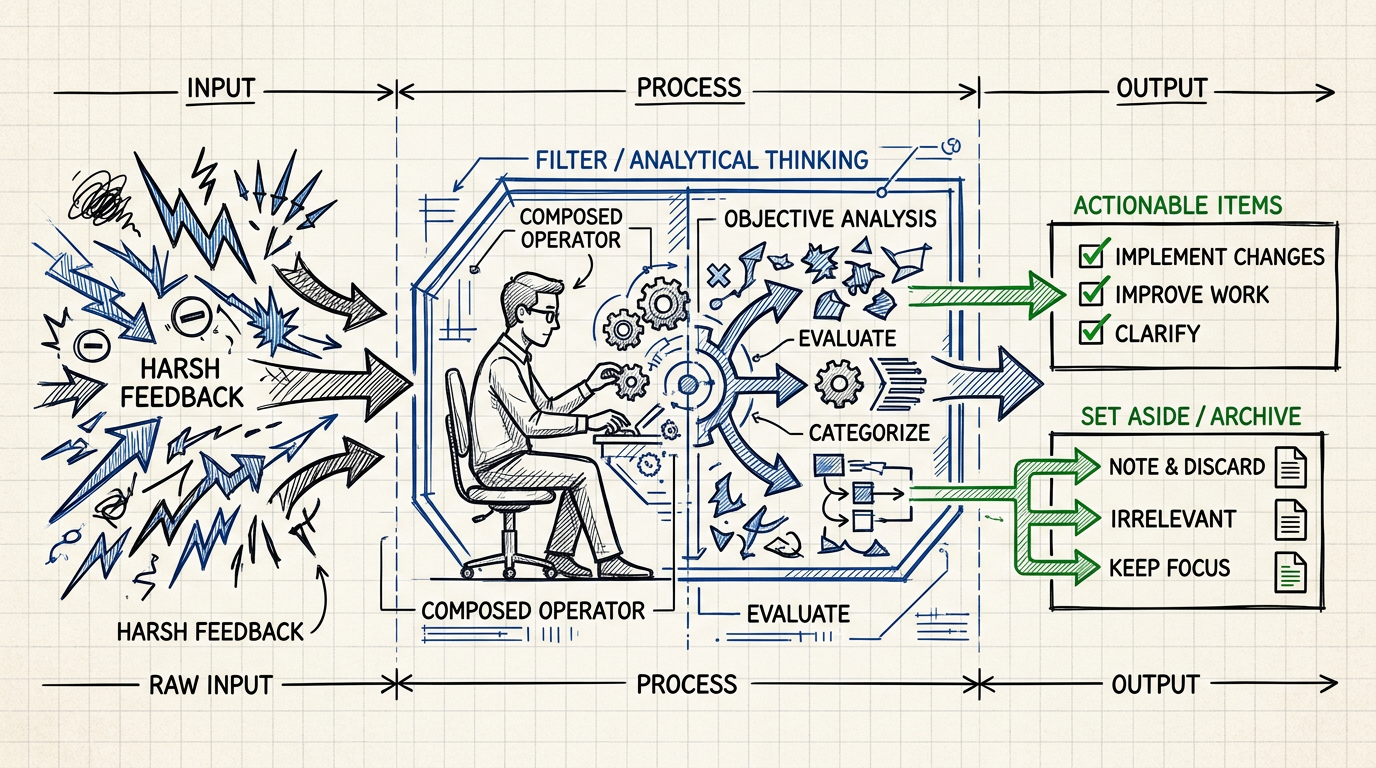
Not every piece of feedback needs to be acted on. Sort them into 3 buckets:
Bucket 1: Actionable + data-backed "Conversion dropped 20% since the flow change" → Act immediately.
Bucket 2: Reasonable but needs validation "I think users might be confused here" → Interesting. Needs testing first.
Bucket 3: Pure subjective opinion "I don't like this color" → Note it. Don't change anything yet.
When feedback comes in like a storm, pause — don't react immediately. Take it back, categorize it, then decide what to act on.
3. Build an Evidence Bank
When UX is dismissed as just "aesthetics," the best defense is evidence.
- Screenshot every usability test where users struggle → save as proof
- Record before/after metrics for every design change → build a track record
- Collect user quotes that support your design decisions
- Write brief case studies for every project where design changes made a positive impact
With evidence, you don't argue with opinions — you argue with facts.
4. Find a Safe Space to Vent
Everyone needs a place to decompress — but don't vent at work.
- UX communities — Facebook groups, Discord servers, local meetups with people facing the same struggles
- A mentor — someone who's been through it before
- Trusted peers — other designers in your industry
- A personal journal — write it out, nobody needs to read it
Bottling it up isn't strength — knowing how to release it appropriately is.
5. Transform Feedback Sessions into Design Critiques
The core problem with feedback in many organizations is it has no structure.
Try proposing a new format:
- Before review: Send context to everyone in advance — what problem are we solving? What did research find? What's the design rationale?
- During review: Ask specific questions — "Does this flow address the user goal?" instead of letting everyone freestyle
- After review: Summarize feedback as actionable items — make it clear what will be addressed and why
When feedback has structure, it reduces noise and reduces pain.
6. Accept That "Not Perfect" Is OK
Perfectionism is the arch-enemy of UX designers.
A design that's 80% good and ships is better than a design that's 100% perfect but never ships.
Every design is an iteration — v1 doesn't need to be flawless. It just needs to be good enough to learn from users.
Moving Forward
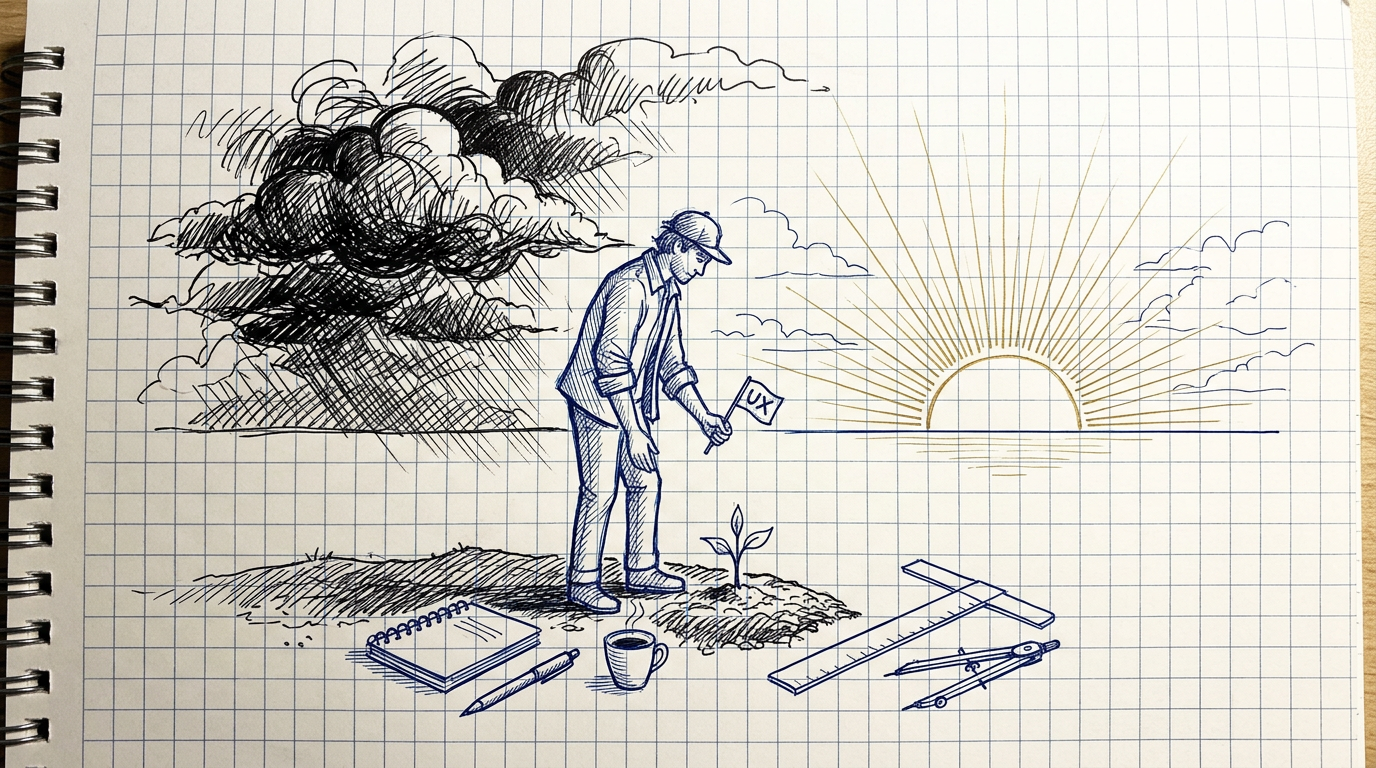
Stress in UX work doesn't go away — it's part of the job. Just like doctors deal with life and death, and teachers deal with distracted students.
But stress that's managed versus stress that's left to accumulate — the outcomes are worlds apart.
What I learned after nearly giving up:
Your value isn't measured by a single feedback session — it's measured by the sum of everything you've built across your entire journey.
People who give harsh feedback usually don't realize it's harsh — they're just sharing opinions in a meeting. But you take it home and think about it until 3 AM.
Good organizations build cultures where feedback is fuel, not a weapon — if your organization weaponizes feedback, that's a culture problem, not a you problem.
Rest isn't weakness — the best designers I know all know how to pause, disconnect, and say "that's enough for today."
If You're in That Place Right Now
If you're sitting in front of a screen late at night, wondering why you chose this career, feeling like the work you poured yourself into has no value in anyone else's eyes.
I want you to know:
It will pass. Not because it gets easier — but because you get stronger.
You're not alone. Every UX designer I know has been at this point — the ones who look confident and relaxed on the outside have sat crying in front of their screens too.
UX work matters. Even on days when nobody sees it. Even on days when it gets dismissed. Every time a user uses a product and thinks "that was easy" — that's your handiwork. Even if they never know.
Take care of yourself.
Because users need someone who understands them — and that someone needs to understand themselves first.